

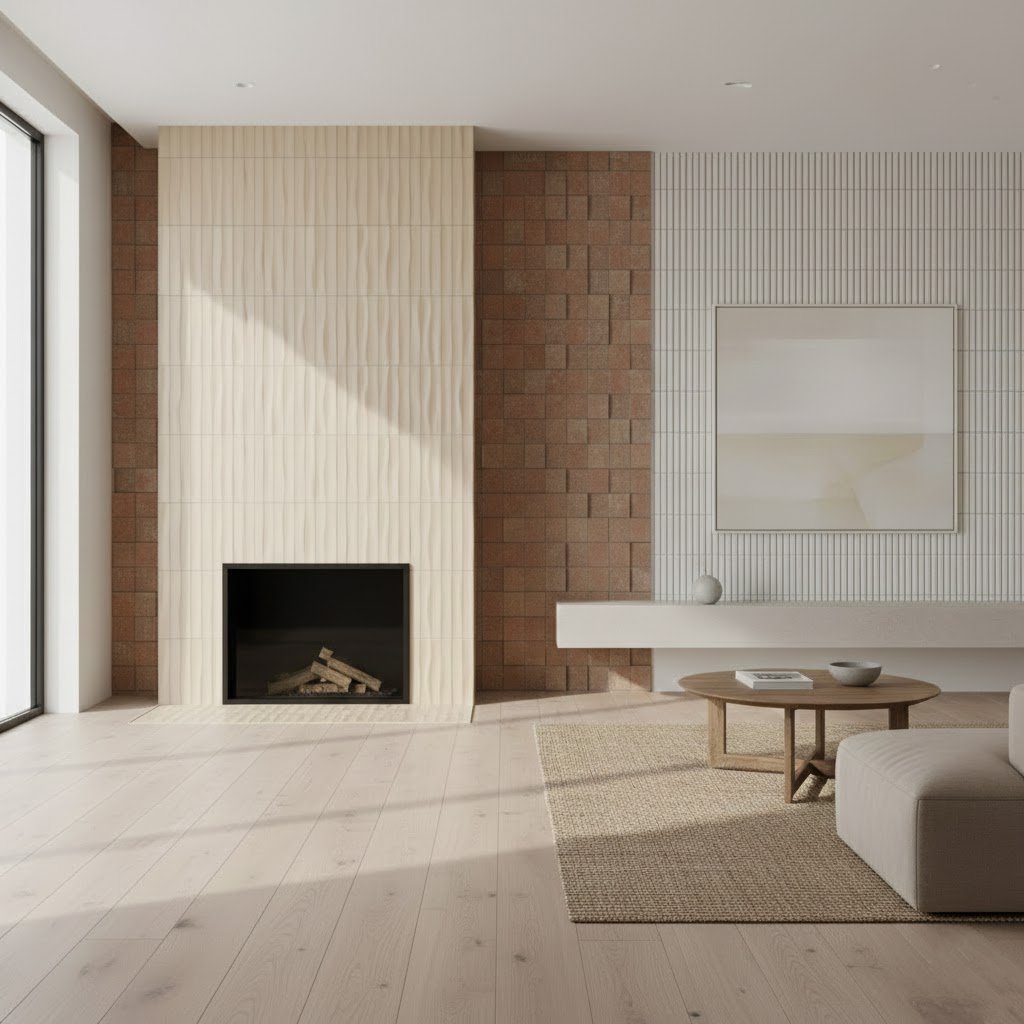
Minimalist interiors are known for their clean lines, neutral color palettes, and uncluttered spaces. While this simplicity creates a sense of calm and order, it can sometimes feel a little flat or impersonal. This is where textured tiles come into play—they bring depth, character, and a subtle sense of luxury without disrupting the minimalist aesthetic.
Why Textured Tiles Are Perfect for Minimalism
Minimalist design thrives on intentionality and balance. Every element in the space should contribute to its overall harmony. Textured tiles enhance minimalist interiors by:
-
Adding dimension: Unlike smooth surfaces, textured tiles interact with light, creating shadows and highlights that make walls or floors more dynamic.
-
Providing tactile interest: Minimalist spaces often rely on visual simplicity. Textured surfaces invite touch and add sensory richness.
-
Creating focal points naturally: Without the need for bold colors or patterns, textured tiles draw attention and add interest subtly.
Popular Textured Tile Options
-
3D Geometric Tiles
Tiles with geometric patterns—like hexagons, triangles, or waves—add sculptural depth to walls or backsplashes. Their three-dimensional effect is subtle yet striking. -
Natural Stone Tiles
Marble, slate, and travertine offer organic textures and natural variations. They add warmth and authenticity to minimalist interiors. -
Wood-Look Textured Tiles
Perfect for Scandinavian-inspired spaces, wood-look tiles with a raised grain pattern bring natural texture while being low-maintenance. -
Concrete or Cement Tiles
Industrial-style textures create a modern edge. Matte, slightly imperfect surfaces give minimalist spaces a grounded, sophisticated feel.
Tips for Using Textured Tiles in Minimalist Spaces
-
Use them strategically: A feature wall, backsplash, or section of flooring can be enough to make an impact.
-
Stick to neutral tones: Whites, greys, and muted shades maintain the minimalist feel, letting texture, rather than color, stand out.
-
Pay attention to lighting: Shadows and highlights enhance the depth of textured tiles, so consider placement of natural and artificial light.
-
Mix textures carefully: Pair smooth and textured surfaces for contrast without clutter. For example, a matte countertop with a textured backsplash creates interest without overwhelming the space.
Conclusion
Textured tiles are a subtle yet powerful way to elevate minimalist interiors. They add depth, character, and visual intrigue, transforming simple spaces into refined, tactile, and inviting environments. Whether in kitchens, bathrooms, or living areas, textured tiles prove that minimalism doesn’t have to be monotonous—it can be beautifully dimensional.